



Eight Off Solitaire
Eight Off Solitaire
Eight Off Solitaire
Eight Off Solitaire

Eight Off Solitaire: Build by Suit, Keep Space to Move

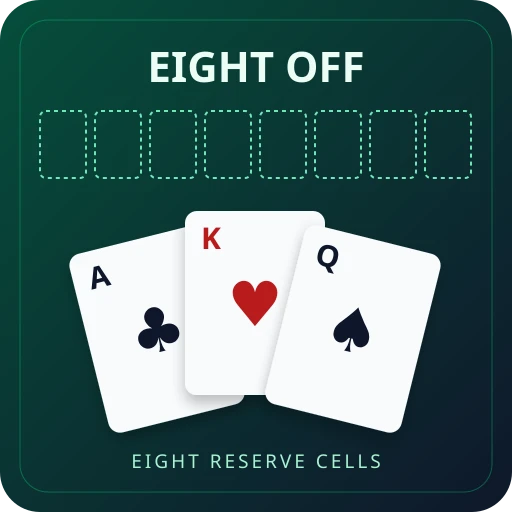
Eight Off Solitaire turns a visible deck into a space-management puzzle. This Card Game Nook version uses 52 cards, eight tableau columns and eight temporary cells. Your destination is four foundations, built by suit from Ace through King.

The opening layout has six face-up cards in each column. The remaining four cards occupy four cells, leaving four available. There is no stock to draw from: inspect the cards already in play and decide which blockers to release first.

Unlike alternating-color FreeCell, columns descend within one suit. A descending suited sequence can move together, but its length cannot exceed the empty-cell count plus one. Empty columns do not increase that allowance.

A vacant column needs a King or a sequence led by one. Think about where parked cards will return before spending another cell, and work toward freeing low cards for the foundations.

Card Game Nook

Eight Off rules

  • 1
    One deck: eight columns of six face-up cards.
  • 2
    Eight cells, four occupied at the start.
  • 3
    Columns descend one rank at a time in the same suit.
  • 4
    Sequence limit: empty cells plus one; no empty-column bonus.
  • 5
    Only Kings or King-led suited sequences fill empty columns.
  • 6
    Foundations ascend by suit from Ace to King.

How to Play Eight Off Solitaire? 📔

  • Inspect the layout

    Locate accessible Aces and the cards blocking them.
  • Make a move

    Click a card for a legal destination, or drag it.
  • Use temporary cells

    Each cell holds one card; keep room for later rearrangements.
  • Complete the foundations

    Move all 52 cards into four ascending suit piles to win.

Frequently Asked Questions ❓

Are all eight cells empty initially?

Do columns alternate colors?

How do I start another deal?

Why Play Eight Off Solitaire? 🏆

Plan a return route

Avoid parking a card without a useful next destination.
Look for Kings

Free a King before relying on an empty column.

Count first

Check spare cells before planning a sequence transfer.